
How to Search Civil Dockets
The Iberia Clerk docket page posts public division links along with dated docket publications. Think of it as a calendar route. It does not offer a party-name or case-number search you can see. For a current civil case record, the clerk points to Clerk Connect, which advertises civil coverage from January 1, 1980 to the present. Treat it as a subscription service, not a free public case-register form, since the search fields sit behind an account. The eClerksLA Statewide Portal is a separate statewide gateway. It describes a free index for participating civil, family, probate, land, and marriage categories, though its login route requires an account, and it does not replace the Iberia clerk's copy service. A federal civil case belongs in PACER. A New Iberia City Court case, a Jeanerette City Court case, or a mayor's-court matter belongs with that separate court, not the parish clerk.
- Read the summons, notice, or filed paper to identify the court, division, case type, and case number if known.
- For a 16th JDC hearing date, choose the division on the Iberia Clerk docket landing and open the newest dated docket publication.
- For case-level filings or minutes, ask the Iberia Parish Clerk whether Clerk Connect, eClerksLA, a counter search, or a copy request is the appropriate route.
- Use the clerk’s counter, phone, or mail route if account access does not display the needed public record.
- Confirm the newest setting with the clerk, court, or attorney when attendance depends on it.
Iberia Parish Civil Records in Clerk Connect
Clerk Connect is the Iberia Clerk's named online channel for record access. It covers current civil and criminal records. Its subscription page lists one-day, 30-day, and one-year packages, with a base price plus a per-page charge. It directs subscription questions to the clerk's office. Those details matter. A public calendar PDF and a subscription record result serve different purposes. Confusing the two wastes time. The same service appears in the clerk's e-filing information for civil and criminal filings. Do not assume a search account, a subscription, and a filer account carry identical privileges. An authorized filer should follow the current clerk instructions instead of inferring e-filing access from a calendar or index screen. Note: Historical COTT/E-Search is described by the clerk as a historical route only. It is no substitute for current Iberia Parish civil docket access.
What a Civil Docket Shows
A civil docket can identify a case, its parties, court and division, filing sequence, motions, settings, minute entries, orders, judgments. It also shows any disposition or access restriction. What the public side of Iberia Parish shows is narrower. The public division pages list a docket publication name, a date, and a View/Download action. You do not get a case-level docket header there. A calendar entry proves only that a setting document was published there. It does not promise that all filings or images are available in that spot.
| Case number | An identifier the clerk can use to locate a file. No local civil-number format was published in the sources reviewed. |
|---|---|
| Parties | The case caption and participants, subject to privacy, sealing, and record-category limits. |
| Filings | Public civil matters can include petitions, answers, motions, orders, judgments, and recorded minutes. |
| Setting | A calendar placement for a hearing or rule. It can change and is not a final result. |
| Judgment or disposition | An official outcome record, which should be confirmed through the clerk or the filed document rather than inferred from a docket label. |
Use a case number confirmed locally rather than inventing an example such as YYYY-CV-#####. The official pages publish no civil number format or code legend, so any pattern you assume could mislead you.
Iberia Parish Family Hearing Officer Settings
The 16th JDC Iberia family page lays out a hearing-officer track for certain family matters. File a qualifying family pleading. The court aims to hold a conference within 21 to 28 days. Some cases sit outside the track, though. Protective orders and child-support enforcement are the listed exceptions. Once the conference wraps up, the clerk sets the judge hearing. This local workflow never replaces a filed notice or a court order.
Deadlines matter here. The page puts required obligations and affidavits five business days before the conference or hearing. The parties can reach an agreement. It can become a consent judgment. Objections to a hearing-officer recommendation are due within five days. And the recommendation itself is not a temporary order until a judge adopts it.
The official Iberia family-court page posts the court’s family workflow and its hearing-officer contact path.
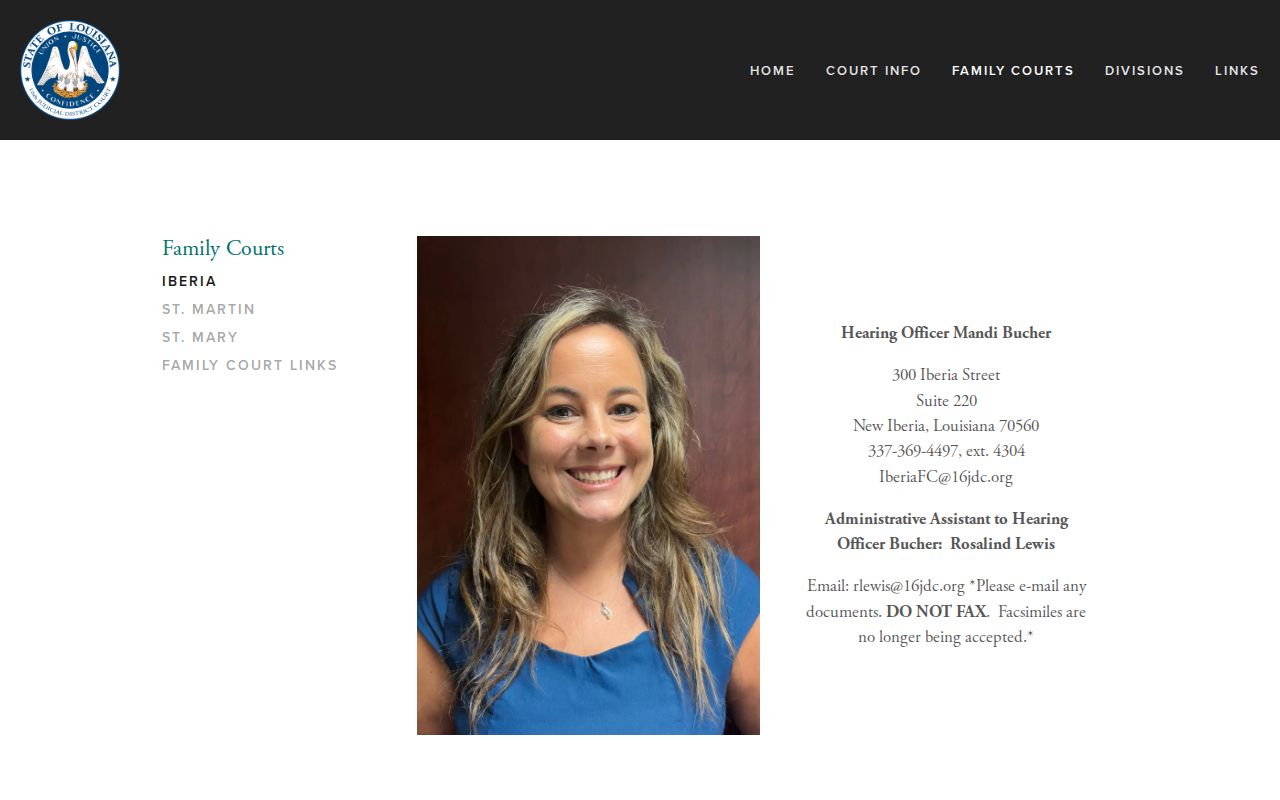
That workflow explains the spacing you may see on an Iberia Parish civil court record. A family conference, a hearing-officer recommendation, and a later judge setting can appear as three separate events rather than one continuous hearing.
Types of Civil Cases on the Docket
General civil pleadings in 16th JDC matters are filed with the Iberia Parish Clerk of Court. Public civil matters can include petitions, answers, rules and motions, judgments, orders, and minutes. All are subject to court orders and privacy limits. The court's named family categories run from divorce, custody or visitation, child support, and spousal support to community property. They also include injunctions, exclusive use of property, contempt, protective orders, and child-support-enforcement matters. Probate and succession records use the civil and probate clerk system. Contested versus uncontested successions follow local allotment rules. Conveyance, mortgage, marriage, and land records are clerk-held too. They form their own record families. They are not ordinary civil docket entries. Match the record type and the court, and the correct access path follows.
- General civil pleadings and orders in 16th JDC matters
- Family matters with the court’s specified hearing-officer process
- Probate and succession files
- Protective-order matters with their own statutory and court limits
- Small-claims cases in the correct district or city court venue
Iberia Parish Small Claims Venue Split
The Iberia Clerk small-claims page draws a line at $5,000 for the district-court route. That route works when the defendant lives somewhere in Iberia Parish beyond the city limits of New Iberia or Jeanerette. A filer inside either city limit is pointed toward the applicable city court instead. Venue comes first. Treat the district court and city court as separate doors rather than one interchangeable docket.
The clerk lists a $350 advanced deposit for one defendant. Add $100 for each added defendant, with service handled by the sheriff. After service, the defendant has ten days. They can pay or file a general denial. The page also sets a three-week follow-up point for docket-number assignment. Amounts and deadlines change. Confirm everything on the current clerk page before you rely on it. An official copy of the district-court small-claims instructions shows the local venue and filing route. Read it in full.
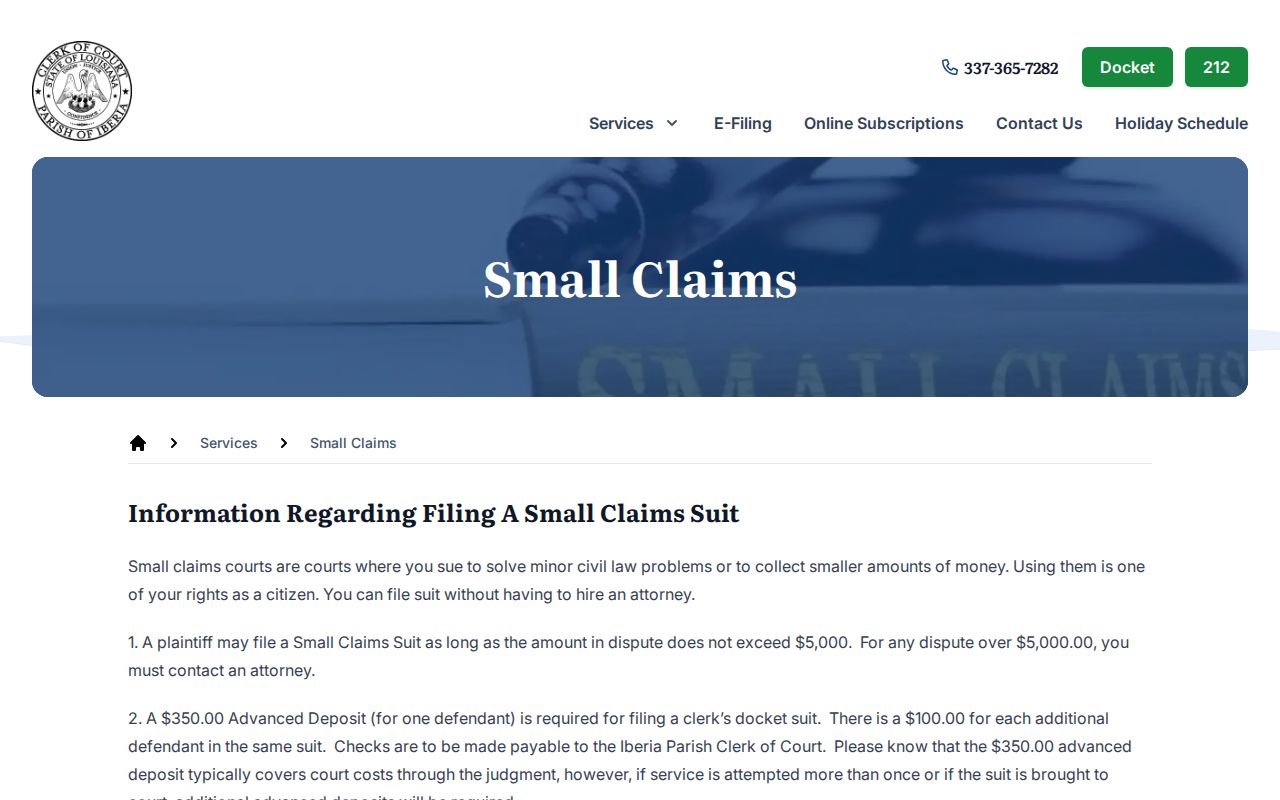
The city-court route runs on its own procedures. Confirm details with that court directly rather than treating the matter as part of an Iberia Parish district-court docket search.
Settings and Hearings on Civil Dockets
The Iberia Clerk's docket process posts a Civil Docket roughly two Fridays ahead of the civil hearing. Local rules calendar motions and rules. Response memoranda are generally due five days before a hearing. Trial memoranda generally come due five days before a merits trial. A published date helps you plan. But the newest publication and the underlying order still govern.
Settlements can pull a case off a later docket. Counsel must tell the docket clerk when a matter settles. The same duty runs to the judge if a matter is continued. Continuances are disfavored and need exceptional circumstances. For the division PDF route and steps to confirm a date, see the Iberia Parish court calendar information.
Iberia Parish Civil Filing and Copy Routes
Authorized filers will find the clerk's e-filing page splits two systems. Civil and criminal filing runs through Clerk Connect. Mortgage and conveyance e-recording runs through eClerksLA. A filing account is not the same as a subscription account. The calendar landing page is not an e-filing form. For a new filing, follow the clerk's current account instructions.
For an existing public court record, the options stay distinct. They include the in-person clerk counter, phone, mail, the account route, or a copy request. The civil and criminal fee page lists ordinary, certified, conformed, and certified-minute copies. Ask the clerk for the current total and payment method. The clerk offers no complete online copy-request form, turnaround promise, or mail-payment workflow.
Iberia Parish Civil Protective-Order Access
The clerk's protective-order page links Louisiana Protective Order Registry forms. It also points domestic-violence applicants to a safety-resource route. Non-domestic restraining-order matters are treated differently. The page sends those filers through an attorney. Court staff cannot pick forms or give legal advice.
Do not assume protective-order records carry the same public visibility as a routine civil docket. Family, protective, juvenile, sealed, or redacted material may sit behind statutes. Court orders can also limit access. Ask the office that actually holds the record what can be inspected or copied. A capture of the Iberia Clerk protective-order resource page documents the specialized civil filing and safety information.
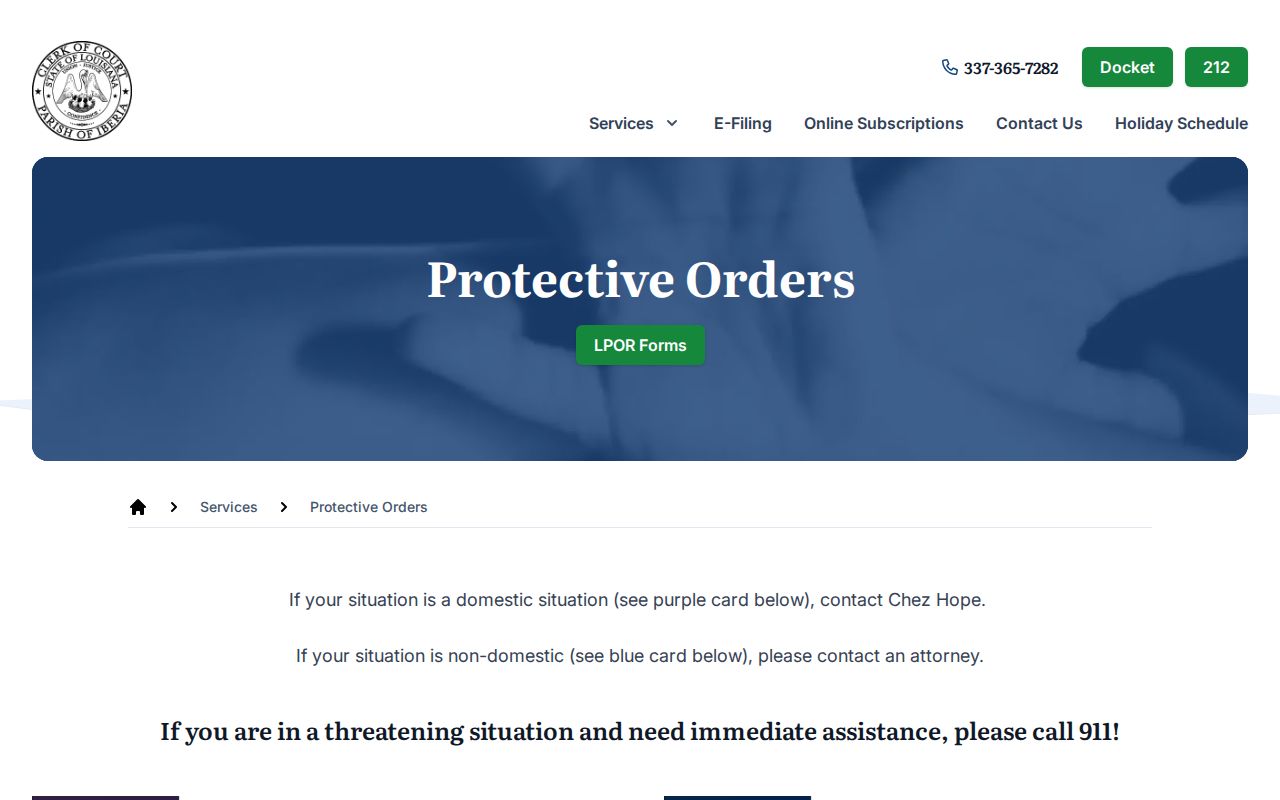
These specialized resources carry a lesson. An Iberia Parish civil docket listing does not make every related filing publicly available.
Public Access to Civil Dockets
For 16th JDC court filings, the Iberia Parish Clerk holds the record. A requester can ask for inspection, an ordinary copy, a certified copy, a conformed copy, or certified minutes. Each request goes through the proper clerk route. The clerk's own material lists in-person, phone, mail, subscription, and calendar-publication channels. The parish-government public-record request process covers parish-government records only, not every court file.
Access still bends to confidentiality, sealing, expungement, privilege, court orders, and redaction. Louisiana procedure puts the burden on filers to shield specified identifiers inside pleadings. Never reproduce Social Security, tax, state-ID, driver's-license, or financial-account numbers. The same rule covers a full birth date. That holds even when a document shows them.
Key Rules:
La. C.C.P. art. 251 - The clerk is custodian of filed court records, and public inspection or copying is generally available during open hours subject to law.
La. C.C.P. art. 253 - Pleadings are filed with the clerk and filers must keep specified private identifiers out of them.
La. R.S. 44:31-35 - Louisiana public-record laws set inspection and copy rights, custodian duties, and remedies, subject to record-specific limits.
Note: If a record you need is not online, gather the division, case number, document type, and date before contacting the clerk. That detail lets the clerk quote the current copy procedure.